
Silver cutlery in a canteen, a teapot that only came out at Christmas, grandma’s wedding ring, a box of necklaces. Silverware and jewellery often carry more emotional value than anything else. That also makes them the hardest to share out fairly. This article covers what is specific to silverware and jewellery. The general steps are in Inheriting a collection.
Is it real silver or gold?
Start with the hallmarks. Real silver and gold often carry a fineness mark, such as 925 (sterling) for silver and 375, 585 or 750 for gold. You may also find an assay office mark, a sponsor’s mark and a date letter. With those marks you can often find out who made a piece and when. How to read them is explained in Hallmarks on gold and silver.
Watch out for:
- silver-plated and gold-plated items: a thin layer on another metal. Marks such as EPNS can point to this;
- worn hallmarks, especially on rings that were worn a lot;
- jewellery without a hallmark: it can be genuine, but have it checked.
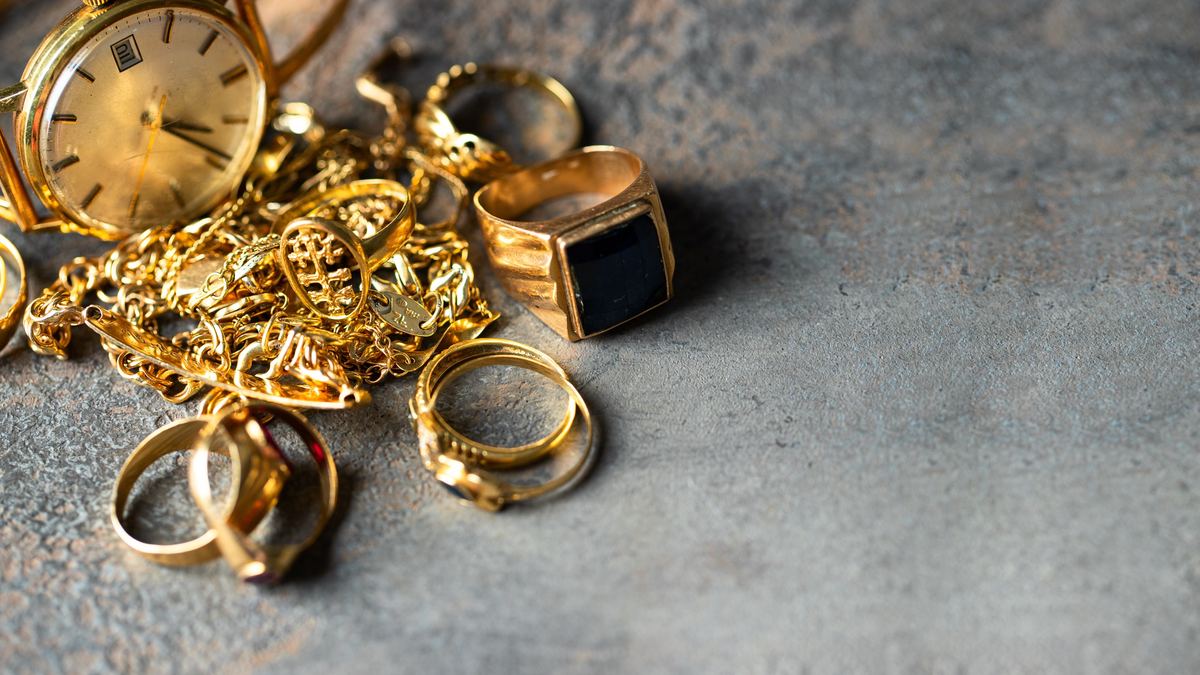
What is it worth?
There are two ways to look at value:
- Metal value: weight × fineness × the price. That is a guide, not a guaranteed price: a buyer allows for a margin and melting costs, so often offers somewhat less. Weigh without stones, knives with steel blades or weighted bases, or subtract that weight as well as you can.
- Value as an object: a well-known design, a sought-after maker or an antique piece can fetch much more than the metal. With jewellery, the stones, the brand and the condition also count.
A buyer who pays “per gram” only looks at the metal. For a fine or old piece, a specialist dealer or auction house may offer more. For jewellery with stones, a valuation is often sensible. For Inheritance Tax, jewellery items worth £1,500 or more are listed individually on form IHT407. How to convert weight and fineness is explained in Fine weight, fineness and karat.
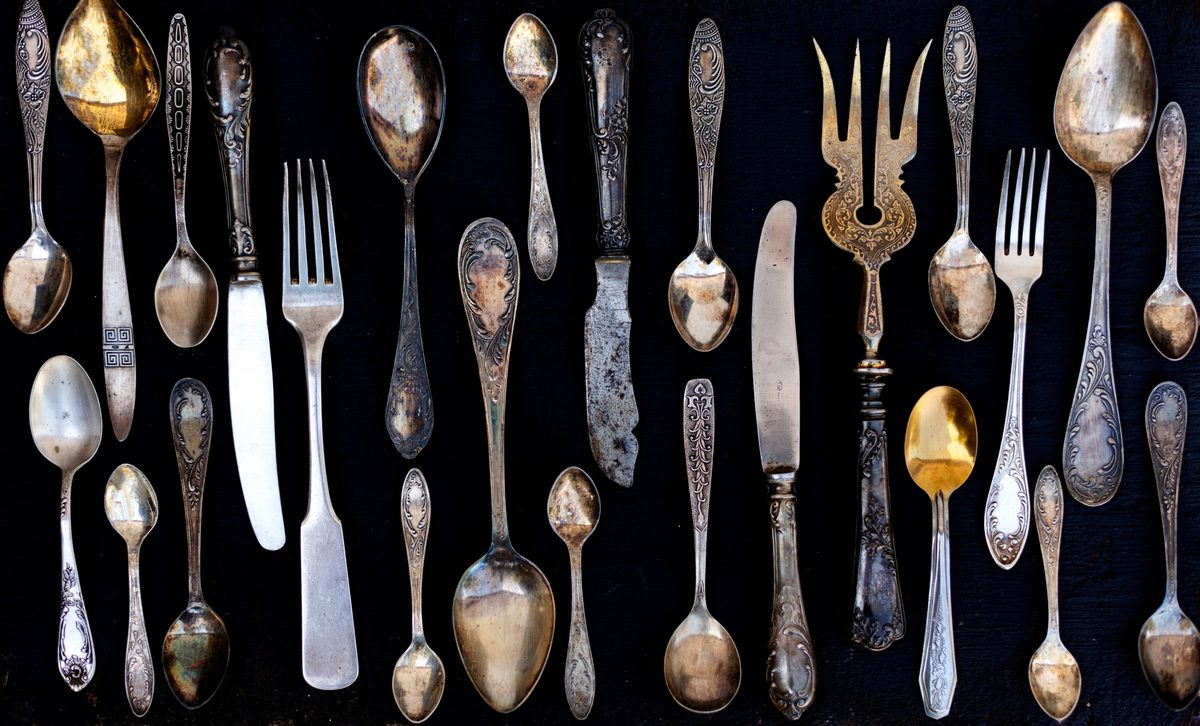
Don’t polish
Tarnished silver is tempting to polish before anyone looks at it. Don’t do it with abrasive polish or a dip. You can polish away fine details and hallmarks, and that can cost a lot of value. With antique silver, buyers actually appreciate a natural patina. Leave it as it is, or read How to clean jewellery first.
Tip: Weigh silverware and jewellery on a kitchen scale and enter the weight and fineness in AgAurium. You immediately see the metal value, as a guide. Try AgAurium for free →
Sharing out fairly
Jewellery and silverware are often the hardest part of an estate, because everyone has a memory attached. A few things that help:
- Record everything first, with photos and a short description. Then everyone is talking about the same thing.
- Agree at what value someone takes something. The metal value is an objective starting point; a valuation gives a fuller picture.
- Taking turns to choose often works well with many small pieces.
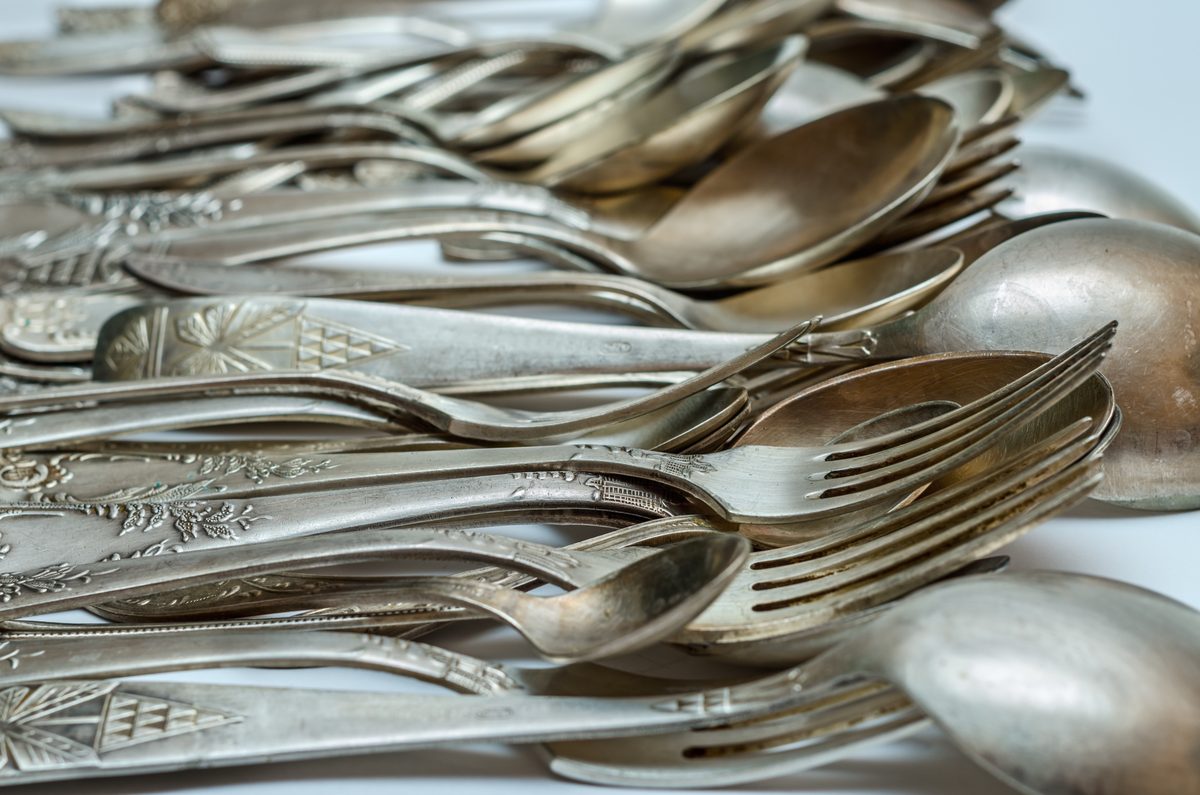
- Keep sets together. A complete canteen of cutlery or a tea service fetches more than separate pieces.
Insurance and storage
With many home contents policies, jewellery falls under a separate limit. If you take it home, check what your own policy covers. More about this in Coin collection insurance. Store silver dry and closed off, so it tarnishes less quickly. Tips are in How to store jewellery.
Who can help?
A jeweller or silversmith can assess hallmarks and stones. An independent valuer or an auction house with a silver or jewellery department can tell you what something would fetch. When you get an offer, ask what it is for the metal and what for the object.
Recording it in AgAurium
At AgAurium you can record silverware and jewellery just like coins. Enter the weight and fineness and you see the metal value at the current price. Stones are recorded per piece of jewellery. A valuation figure you enter separately, so you never mix up metal value and real value.
Keep track of your collection with AgAurium
Coins, bars, banknotes, stamps and jewellery in one overview, with photos, live metal prices and proofs of purchase. Free, without ads, in English, Dutch, German, French and Spanish. Your data stays yours.