
Start collecting and you’ll soon come across a whole glossary: capsules, seals, slabs, flips, 2×2 holders, coin tubes, stock pages. They all protect, but not in the same way. A good choice prevents scratches, fingerprints and discolouration. A poor choice can actually cause damage.
For coins
Capsule
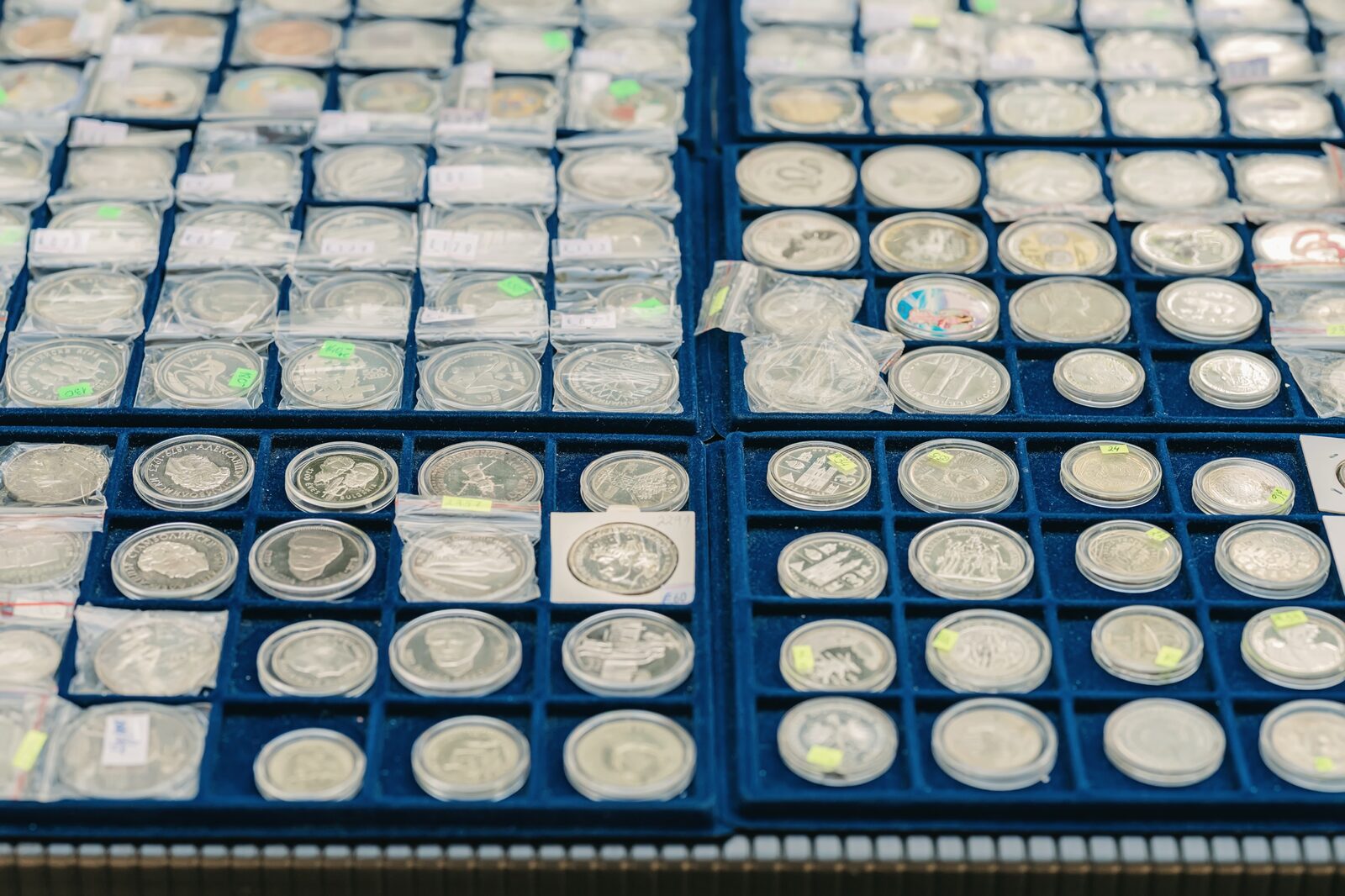
A capsule is a round, clear case made of hard plastic (usually acrylic or polystyrene), sized exactly to fit the coin. Some capsules have a soft ring inside, so slightly smaller coins sit snugly too. Capsules are the best protection for loose silver coins, proof coins and collector coins. You can view the coin from both sides without touching it.
Get the size right: a capsule that is too small puts pressure on the rim, and in one that is too large the coin rattles around. Check your coin’s diameter and pick the matching capsule.

Coin tube
A coin tube is a sturdy tube with a lid, for a stack of coins of the same size. Ideal for bullion coins such as Maple Leafs or Philharmonics. The coins lie flat on top of each other and barely move. Take them out carefully, ideally by tipping the tube over a soft surface.
2×2 holder and flip
A 2×2 holder is a cardboard card with a film window that you fold around the coin and staple or seal shut. Cheap, tidy and easy to write on. Watch out for two things: staples can scratch other coins, and the film must be PVC-free. Self-adhesive holders are more practical than stapled ones.

A flip is a plastic sleeve with two pockets: one for the coin and one for an information card. Only choose PVC-free flips (often stiffer and less transparent). Soft PVC flips leave a green, sticky film on coins after a while.
Albums and coin trays
Coin albums with slip-in pages give you a good overview. Here too: PVC-free only. Coin trays (drawers or cases with a compartment for each coin, often lined with velvet) look great for display. Do put the coins in capsules first, though, so the velvet doesn’t touch them.
For bars
Seal (blister) and certificate
Many small gold bars are sold in a seal: a card with a clear, sealed blister, often with a serial number and certificate. Leave the bar in it. A bar in an unopened seal is better protected, easier to sell and can be checked by a buyer straight away. Keep the certificate with it.
Larger silver bars often come without a seal. Store them in a pouch made of acid-free material or in a box with compartments, so they don’t rub against each other.
Graded coins and banknotes: the slab
A slab is a sealed, rigid holder from an independent grading service, such as NGC or PCGS for coins or PMG for banknotes. Inside is a label with the grade and a unique number. The slab guarantees the condition and authenticity. So never open it: if you do, the grade is lost. You can, however, verify the number online with the grading service.
Tip: In AgAurium you record the packaging of each item. Filter on ‘None’ and you instantly see which coins still need a capsule. Try AgAurium for free →
For banknotes and stamps
- Banknotes: a sleeve of polyester (Mylar, Melinex), polypropylene or polyethylene for each note, then into an acid-free album or box. See How to store banknotes without damage.
- Stamps: stockbooks with polyester or polypropylene strips, or albums with mounts. Hinges are still used, but they leave marks on the gum. On mint never hinged stamps, that lowers the value.
PVC-free: why it matters so much
One rule keeps coming back: no soft PVC. PVC contains plasticisers that are released over time. On coins this produces a green, sticky film that can eat into the metal. On paper it causes stains and attacks the ink. A quick test: PVC feels limp and slightly greasy and sometimes smells of plastic. PVC-free materials are stiffer and crinkle when you bend them. If in doubt, replace it. New sleeves cost very little compared with the damage.
Overview
| Item | Best choice | Watch out for |
|---|---|---|
| Loose silver or proof coin | Capsule in the right size | Correct diameter |
| Bullion coins of one type | Coin tube | Remove carefully |
| Large number of lower-value coins | 2×2 holder or PVC-free flip | Staples and PVC |
| Small gold bar | Original seal with certificate | Don’t open |
| Graded coin or banknote | Slab | Never open |
| Banknote | Polyester sleeve in acid-free album | No PVC or glue |
| Stamp | Stockbook or mounts | No hinges on mint never hinged |
Recording the packaging in AgAurium
How an item is packaged also says something about its value. A bar in a seal or a coin in a slab sells differently from a loose one. In AgAurium you record the packaging of each item (none, seal, capsule, sleeve or your own description). When you filter, you can see straight away which items still need proper protection.
You can also keep the certificate or invoice for a bar with the item as proof of purchase: as a PDF or photo, visible only to you. That way you have everything together when you sell, even if the paper certificate ever goes missing.
AgAurium is free and ad-free. A donation helps keep it that way.
Keep track of your collection with AgAurium
Coins, bars, banknotes, stamps and jewellery in one overview, with photos, live metal prices and proofs of purchase. Free, without ads, in English, Dutch and German. Your data stays yours.