
A collection rarely gets ruined in one go. Usually it happens slowly: an album in the loft that gets warm every summer and damp every winter, silver that tarnishes in a cardboard box, banknotes whose colours fade in a sunny room. The right spot prevents all that, and it doesn’t have to be expensive.
The four enemies: moisture, fluctuations, light and air
Moisture
Moisture is the biggest danger. On paper (banknotes and stamps) it causes mould, small brown spots and cockling. On metal it speeds up oxidation: silver and copper tone faster, and iron and steel rust. A moderate, stable humidity is ideal. For mixed collections, museums often aim for roughly 40 to 50 percent. For metal alone it can be slightly drier, but paper becomes brittle if it is too dry.
Fluctuations
Big swings in temperature do more harm than a spot that is slightly too warm or too cold. As things cool down, moisture can condense, even inside a capsule or sleeve. A stable room temperature is therefore better than a place that is hot in summer and cold in winter.
Light
Sunlight and UV fade ink and colours and make paper brittle. Metal can also tone faster under strong light. Storing in the dark is best. If you want to display something, use UV-filtering glass and keep it out of direct sunlight.
Air and materials
Some materials give off substances that attack your collection:
- Soft PVC (old sleeves and albums) releases plasticisers. On coins this causes a green, sticky film, and on paper it causes stains.
- Rubber, wool, low-quality felt and ordinary cardboard often contain sulphur, which makes silver tarnish quickly.
- Oak and some chipboard give off acidic vapours that attack metal.
- Fresh paint, cleaning products and glue in the same cupboard are also best avoided.
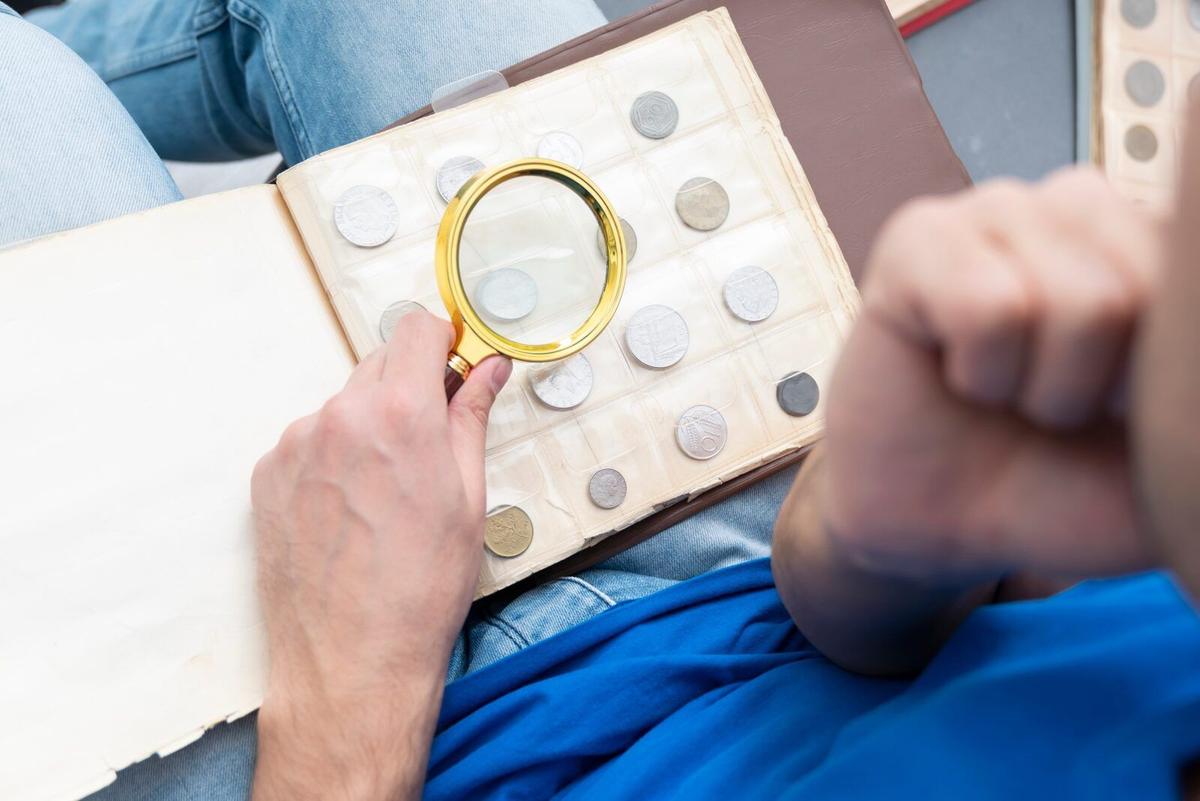
If you’ve inherited an old album, check it. Yellowed, soft or sticky pages are a sign that it’s time to switch to new materials.
Where in the house?
- Good: a cupboard in a living room or bedroom, against an interior wall, out of the sun and away from the heating.
- Not good: the loft, cellar, garage, shed, kitchen and bathroom. That is where temperature and humidity fluctuate most.
- Also not good: against an exterior wall (cold and sometimes damp), on a windowsill or above a radiator.
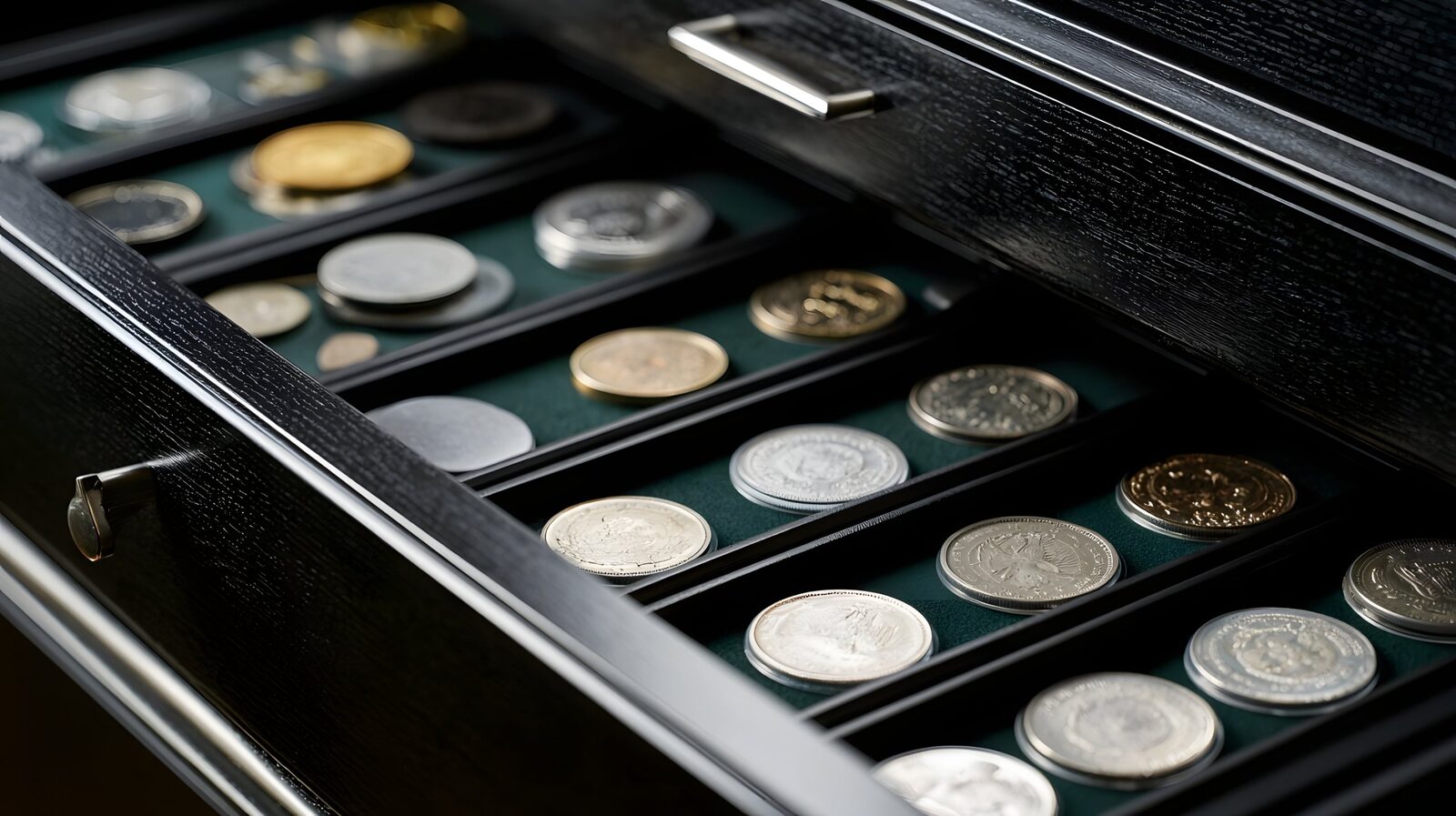
Put a hygrometer in the cupboard if you want to know what the humidity is doing. Place silica gel in closed boxes. For silver there are also anti-tarnish strips that absorb sulphur from the air. Put them in the box, not against the coins.
Tip: Give every item a storage location in AgAurium, such as ‘safe’ or ‘album 2’. Then you, and later your heirs, always know where everything is. Try AgAurium for free →
Security: home safe, safe deposit box or spread out?
A collection containing precious metals is also attractive to burglars. Think about what suits you:
- A safe at home. Choose a safe that is anchored to the wall or floor and has a recognised burglary-resistance certificate. A loose safe can simply be carried off by a burglar. A fire-resistant safe protects paper from heat, but not every fire safe is also burglary-resistant.
- A bank safe deposit box. Secure and often well climate-controlled, but you can’t always get to it, and fewer and fewer banks offer them. Also check what your insurance covers for items in a safe deposit box.
- Spreading it out. Some collectors keep part of their collection at home and part elsewhere. That way, not everything is lost in one go.
- Don’t talk about it too much. The fewer people who know you have a valuable collection, the better. Be careful what you share on social media, too.

Bear in mind: a safe can develop its own microclimate. A fire-resistant safe in particular can become damp, because its insulation contains moisture. Put silica gel inside and check it now and then.
Checklist
- A stable room temperature, out of the sun and away from the heating
- Moderate humidity, with silica gel in closed boxes
- Not in the loft, cellar or garage
- No PVC, rubber, ordinary cardboard or oak in direct contact with the collection
- Every item in its own suitable packaging (see Capsules, seals, slabs and sleeves explained)
- An anchored, burglary-resistant safe for precious metals, or a bank safe deposit box
- An up-to-date overview of what is kept where
Know what is where, with AgAurium
That last point is often forgotten. If you spread your collection across a safe, a few albums and a safe deposit box, after a while you no longer know exactly what is where. In AgAurium you give each item a storage location, for example “home safe”, “album 2” or “safe deposit box”. You can search on it, and with Bulk actions you can change the storage location of a whole group of items in one go.
With multiple collections you can keep “home” and “safe deposit box” apart, for example, and you can print an overview for each collection. The storage location is visible only to you and is never shared, not even when you share a collection with someone. Your viewers don’t need to know where your things are.
AgAurium is free and ad-free. Find it useful? A donation helps keep it free.
Keep track of your collection with AgAurium
Coins, bars, banknotes, stamps and jewellery in one overview, with photos, live metal prices and proofs of purchase. Free, without ads, in English, Dutch and German. Your data stays yours.