
You don’t need a workshop to look after a collection properly. With a few good tools you can handle your items safely, see details you would otherwise miss and check whether a coin or bar is what it claims to be. Below you’ll find the basics, plus what you might add later.
The basics
A 10x loupe
A loupe is a collector’s most important tool. At 10x magnification you can see mintmarks, tiny scratches, signs of cleaning, printing errors on banknotes and the details of a postmark on a stamp. Choose a triplet loupe: it has three layers of glass and gives a sharp image right to the edge, without coloured fringes. An ordinary 2x or 3x magnifying glass is handy for a quick look around.
A soft surface
A felt or velvet mat, or a piece of soft fabric. This is where you put coins and bars down, and where an item lands if you drop it. Cheap, but indispensable.
The right tongs
Not all tweezers are suitable. Sharp or serrated tips cause scratches and holes.
- Stamp tongs: flat with rounded tips. Ideal for stamps, and for banknotes too.
- Coin tongs: with plastic or padded jaws. Handy for putting a coin into or taking it out of a capsule without getting your fingers on the design.
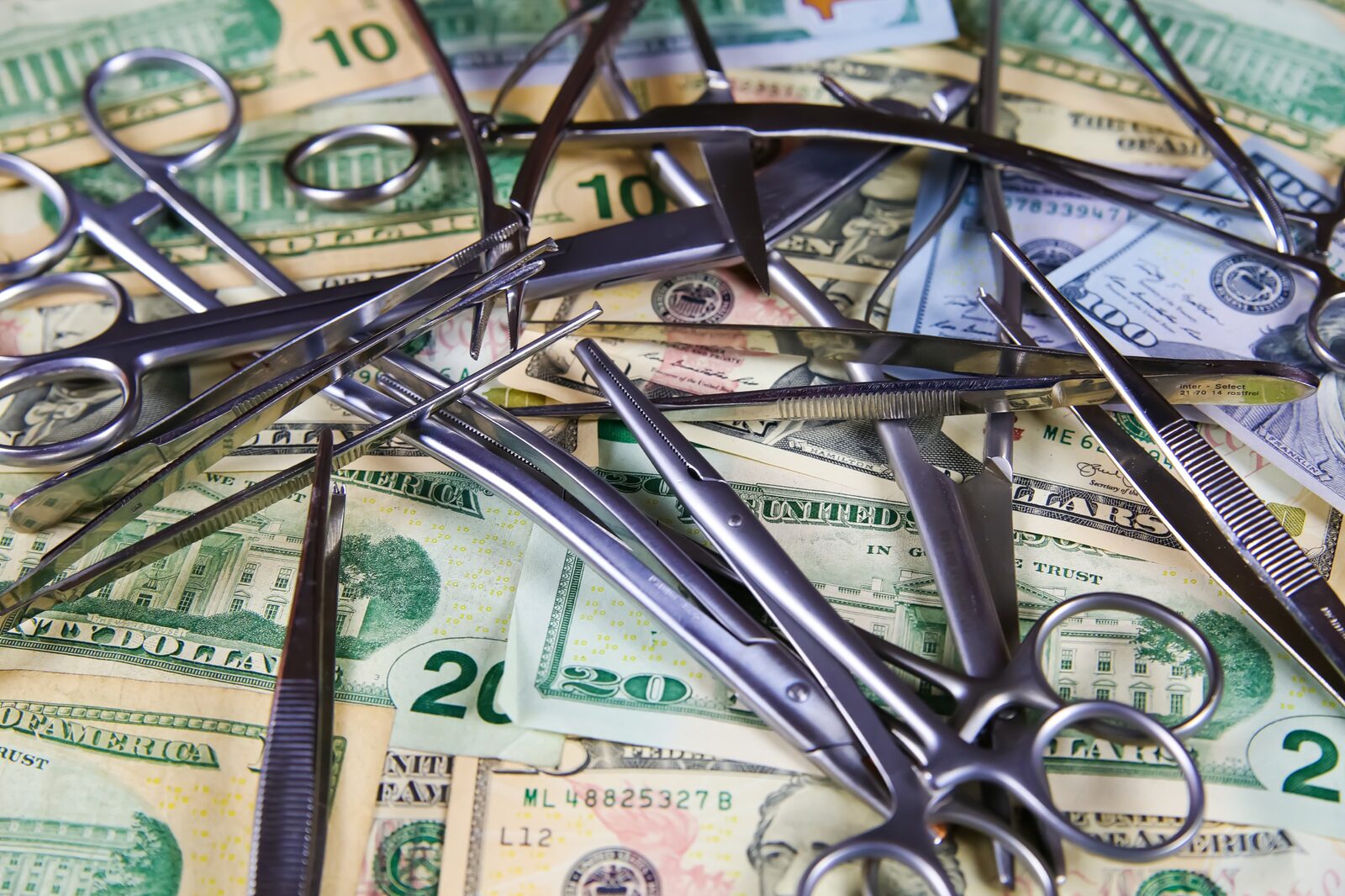
So leave surgical or pointed tweezers in the drawer, however professional they look.
Gloves
Powder-free nitrile gloves give you grip and keep skin oils off your items. Cotton gloves are fine for brief moments, but coins slip out of them more easily. Read more in Handling coins and bars without a seal.
Digital scales
Scales accurate to 0.01 grams don’t cost much and are one of the best ways to check whether a coin or bar is genuine. A real 1 ounce Krugerrand, for example, weighs 33.93 grams. If the weight is clearly off, that is a reason to look more closely. Check your scales now and then with a calibration weight.
Callipers
With (digital) callipers you can measure the diameter and thickness of coins and the dimensions of bars and banknotes. Together with the weight, these measurements tell you a lot: a fake can have the right weight but be too thick, or the other way round. See also Calculating fine weight, fineness and karat.
Useful as you progress
- A UV lamp. Under UV light, the security features of modern banknotes light up. You can also spot traces of cleaning, repairs and glue on coins, banknotes and stamps.
- A strong magnet (neodymium). Gold and silver are not magnetic. If a “gold” coin or bar is attracted, something is wrong. The reverse proves nothing, though: many fakes aren’t magnetic either.
- A daylight lamp. Under ordinary yellowish lighting you can’t judge colours and toning properly. A daylight lamp makes assessing and photographing much easier.
- A hygrometer. A small meter that shows the humidity. Useful in the cupboard or safe where your collection is kept.
- Silica gel. Sachets that absorb moisture. Put them in closed boxes and replace or dry them out from time to time.
- A perforation gauge and watermark detector for stamp collectors.
Tip: Weighed and measured? Record the weight and dimensions in AgAurium. For well-known coins the catalogue fills in the official figures, so you can compare straight away. Try AgAurium for free →
Luxury and specialist kit
- A microscope or digital microscope with a camera, for very small details and good photos.
- An electronic tester that measures the conductivity of a coin or bar. It can tell genuine from fake without causing damage, but easily costs a few hundred euros.
- XRF analysers, which measure exactly which metals an item contains. You mainly see these at dealers.
For most collectors, a loupe, a soft surface, the right tongs, nitrile gloves, scales and callipers are enough. All together, that costs less than an average silver coin.
Keeping your measurements in AgAurium
Scales and callipers are most useful when you also record the results somewhere. In AgAurium you note for each item the weight in grams or troy ounces, the diameter, height and width, the fineness and the condition. For well-known coins and bars, the shared catalogue fills in much of this data automatically as soon as you type the name. That way you can see straight away whether your measurement matches.
With photos of the front and back, you also capture what you saw under the loupe. Bit by bit, you build an overview that is always to hand, whether for selling, insurance or simply out of curiosity.
AgAurium is free and ad-free. A small donation helps keep it that way.
Keep track of your collection with AgAurium
Coins, bars, banknotes, stamps and jewellery in one overview, with photos, live metal prices and proofs of purchase. Free, without ads, in English, Dutch and German. Your data stays yours.