
Have you built up a collection of coins, banknotes, stamps or precious metals? Sooner or later you want to know what it is worth. Perhaps you have been collecting for years, want to insure or sell your collection, or have inherited one.
But how do you work out that value? What can you research yourself, and when does an appraiser make sense? This article explains which factors determine value, how to make a first estimate yourself and why good records do half the work.
What is a valuation?
A valuation or appraisal is an assessment of the value of an object or collection at a given moment. The method an appraiser uses depends on the type of object and on the purpose.
There is no single fixed value. What you once paid for a coin is different from what a dealer will give you for it today. And the value your insurer wants to know is different again from the result at an auction. So first decide why you want to know the value:
- You want to know roughly what your collection is worth.
- You want to insure your collection.
- You want to sell part or all of it.
- You have inherited a collection and need to divide or declare it.
- You want to record your possessions, or see how they develop over the years.
The purpose decides whether a rough estimate is enough or whether you need a formal appraisal report.
What determines the value?
Each collecting field has its own details, but five factors keep coming back.
1. Rarity
How hard is the piece to find, and how many exist? The mintage, the year, a mint mark or a special variety can make the difference. But rare does not automatically mean expensive: there have to be buyers who want it.
2. Condition
The condition of a piece often makes the biggest difference. For coins you look at wear, scratches, edge damage and how sharp the details still are. For banknotes at folds, tears, stains and discolouration. For stamps at perforations, gum, discolouration and cancellations. So never compare just the name of a piece, but also its condition. More in Grading condition.
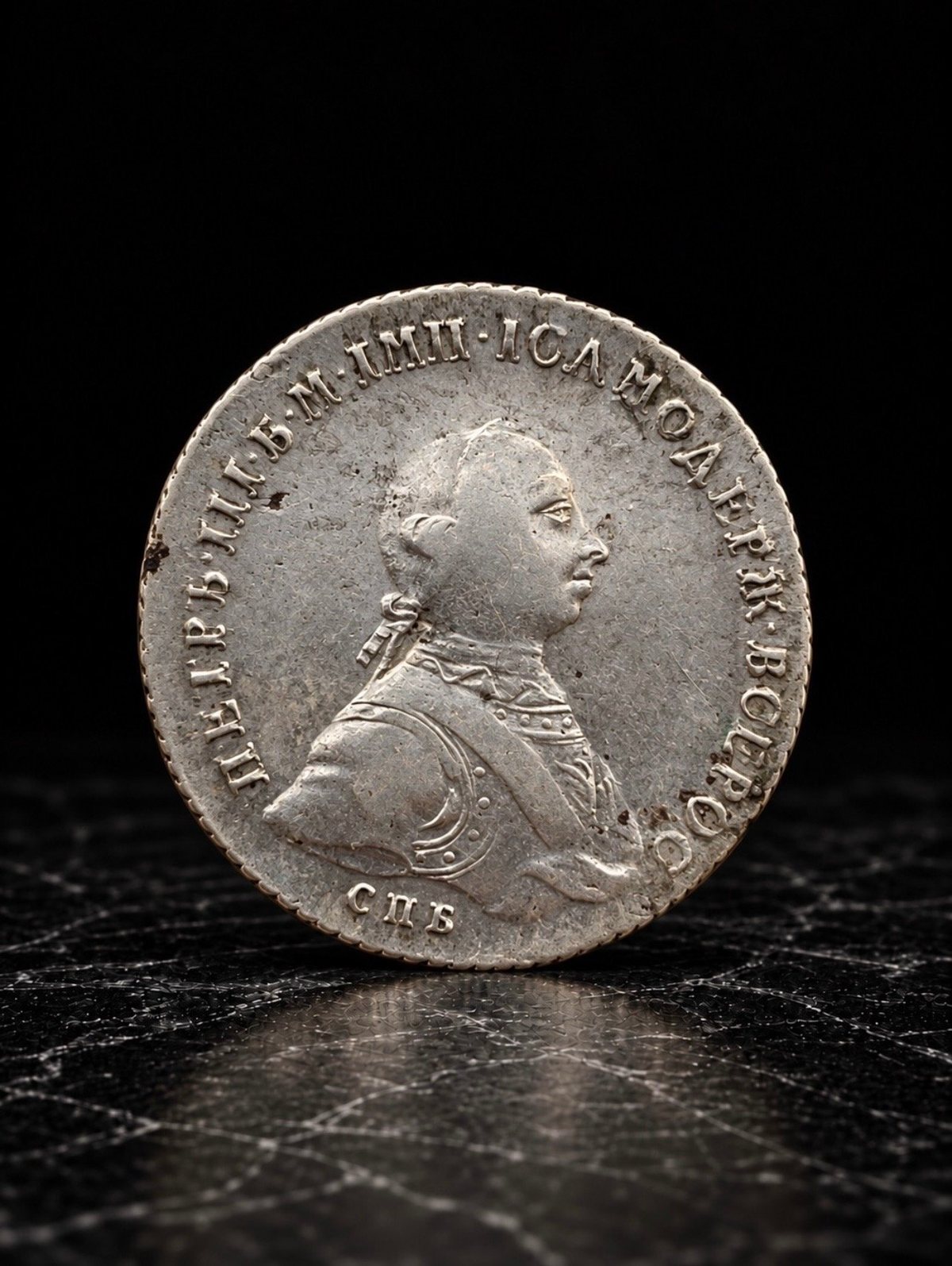
This silver coin of Tsar Peter III, struck in St Petersburg (the mint mark СПБ below the portrait), shows how condition works. The portrait and legend are still clearly legible, but you can see wear on the highest point of the portrait and small dark spots. Two examples of the same coin can differ widely in price because of this.
3. Authenticity
Is the piece genuine? Popular coins and banknotes exist as forgeries, replicas and altered pieces. Proof of purchase, certificates and a slab from a grading company help support the provenance. For gold and silver, weight, dimensions and density say a lot. If in doubt, have the piece checked by a specialist. See also Real or fake?.
4. Supply and demand
Interest changes all the time. What was popular a few years ago may be less sought after now, and vice versa. So look at recent sold prices of comparable pieces, and take condition, the sales channel and costs such as auction fees into account.
An asking price in an advert is not the same as a price something actually sold for.
5. Material and metal value
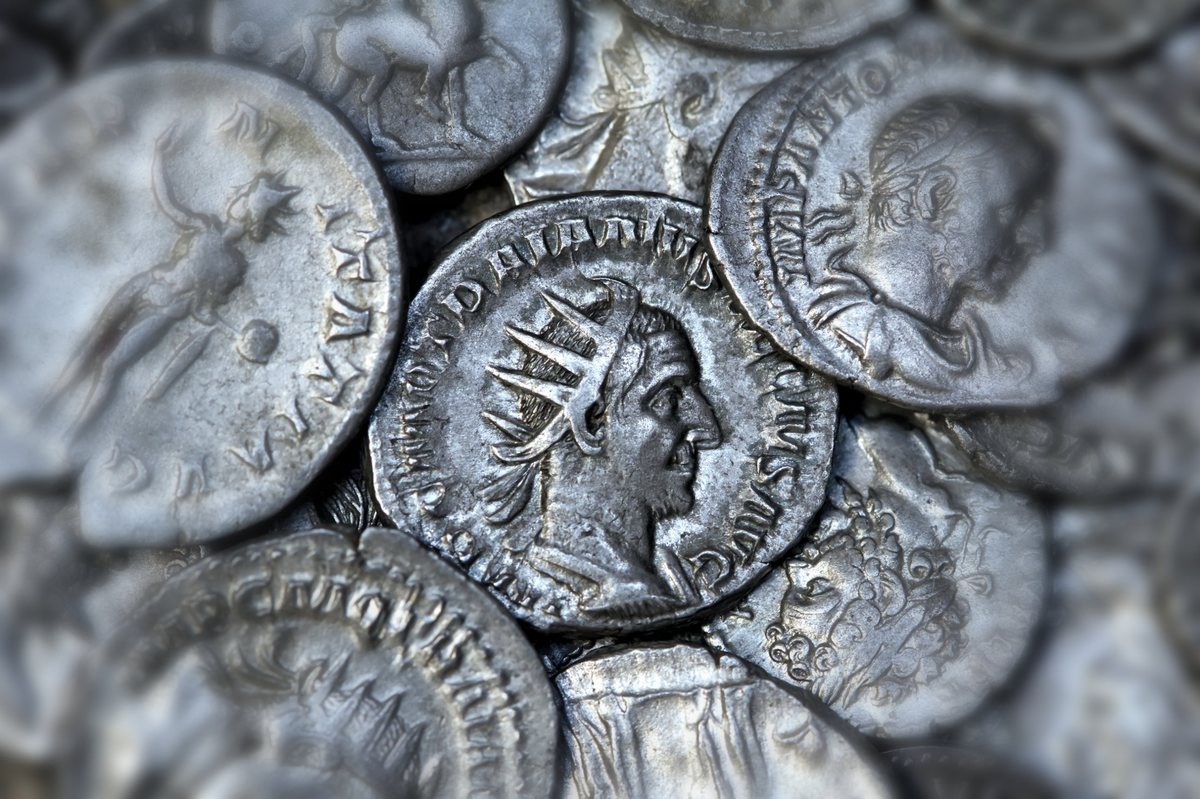
For gold and silver coins and bars, the metal value also counts: weight × fineness × the current price. For a bullion coin such as a Krugerrand, that is most of the price. For a historical collector coin, the collector value can be many times the metal value. So always look at metal value and collector value separately. How to read weight and fineness is explained in Fine weight, fineness and karat.
Research the value yourself in five steps
You can do a lot yourself, even before calling in an appraiser.
Step 1: make an inventory. Start with what you have. For coins: country, year, mint mark, material and face value. For banknotes: country, issuing bank, issue and details. For stamps: country, issue and condition. Start with what you know and fill in the rest later.
Step 2: take photos. Photograph coins on both sides and record details such as a scratch, shifted ink or a mint mark. Keep each photo with the right piece, so you later know which photo belongs to which coin. Tips are in Photographing coins and jewellery with your phone.
Step 3: look for comparable pieces. Use catalogues, reference works and reliable sales results. Pay attention to variety and condition: a damaged coin cannot be compared with one in top condition. And keep catalogue value, asking price and sold price apart.
Step 4: record your purchase prices. That way you can see what you once paid. But the purchase price is no guarantee of current value. So record it separately from a current estimate.
Step 5: decide whether you need an appraiser. Do you have a special coin, a large collection, or doubts about authenticity? Then an expert helps.

Purchase price, market value, appraised value and metal value
These terms are often used interchangeably, but they mean different things.
| Term | What it is | Where to find it |
|---|---|---|
| Purchase price | What you paid | Invoice, receipt, proof of payment |
| Market value | Roughly what it fetches now, depending on demand and sales channel | Recently sold comparable pieces |
| Appraised value | The value an appraiser sets, for a specific purpose | Appraisal report |
| Metal value | Weight × fineness × price | Current gold or silver price |
With an appraisal report it is important to know which value the appraiser means. For insurance it is often the replacement value: what it costs to buy a comparable piece again. For a sale or an estate it is more likely the sale value, which can be considerably lower.
Tip: In AgAurium, enter the purchase price and, separately, a manual value if you have an appraisal. That way you never mix up the two. Try AgAurium for free →
Good records do half the work
If you have your collection appraised, it helps enormously if you already know what you have. Hundreds of coins without an overview cost an appraiser a lot of time, and therefore cost you money. A detailed overview with photos makes the composition clear straight away.
That applies not only to an appraisal. Insurers ask for it too. The home contents policy we looked at for AgAurium lists as examples of good documentation: purchase receipts, proof of payment, appraisal reports and a detailed log from which the value and composition of the collection can be determined. Other insurers may have different requirements, but it underlines one thing: don’t wait until something happens. Read more in Coin collection insurance.
For each piece, record at least:
- name and features;
- photos of front and back;
- purchase date and purchase price;
- any estimate or appraisal, separate from the purchase price;
- the storage place;
- related proof of purchase and certificates.
When should you call in an appraiser?
Doing your own research is a good start. But a professional appraisal makes sense if:
- you think you have a rare coin or special banknote;
- you have a large collection;
- you have doubts about authenticity;
- you want to insure the collection above the limit of your contents insurance;
- you have inherited a collection and want to record its value carefully;
- you want to sell and know what it can reasonably fetch.
Choose an independent appraiser with experience in your collecting field. In the Netherlands you can find registered appraisers, for example, in the Verenigd Register van Taxateurs (VRT), in the sector art, antiques and valuables; other countries have their own registers and professional associations. Ask in advance:
- which value they will determine and what you can use the report for;
- what it costs: often a few hundred euros, at a specialist firm sometimes from around €650 excluding VAT;
- how long the report is valid: usually three to six years, but some insurers want a report no older than three years.
A dealer who offers to value your collection and buy it straight away has an interest of their own. That need not be a problem, but if in doubt, get a second opinion.
How AgAurium helps
In AgAurium you record coins, bars, banknotes, stamps and jewellery. For each piece you record the details, condition, up to three of your own photos, the purchase price, the storage place and your proof of purchase. For gold, silver, platinum and palladium you see the current metal value. If you have an appraisal or your own estimate, enter it as a manual value, separate from the purchase price. For many coins from the catalogue you also see an estimated collector value, an indication based on asking prices.
Note: the metal value is not the same as the sale value or the appraised value, and AgAurium does not set an official appraised value. With Report (PDF) you can, however, give an appraiser or insurer a tidy overview with details, photos and proof of purchase in one go.
In short
- First decide why you want to know the value: insuring, selling or inheriting each calls for a different value.
- Rarity, condition, authenticity, supply and demand and metal value together determine the value.
- Keep purchase price, market value, appraised value and metal value apart.
- A good overview with photos saves time and money at an appraisal.
- For special pieces, a large collection or doubts about authenticity: call in an independent appraiser.
Sources: AVROTROS Radar, “Je verzameling verzekeren”; NIVRE, VRT guideline for art and antiques; Lengkeek fees for art, antiques and valuables 2026; Howden, “Waarom een actuele taxatie meer zekerheid geeft”; the policy conditions of a Dutch home contents insurance (article 2.8.3).
Keep track of your collection with AgAurium
Coins, bars, banknotes, stamps and jewellery in one overview, with photos, live metal prices and proofs of purchase. Free, without ads, in English, Dutch, German, French and Spanish. Your data stays yours.