
If you want to buy gold in coin form, you keep coming across the same five names: the Krugerrand, the Maple Leaf, the Philharmonic, the Britannia and the American Eagle. In the 1 ounce version, all five contain exactly 1 troy ounce of pure gold, which is 31.10 grams. Yet they are not the same. They differ in fineness, weight, size, appearance and often in price as well.
The five coins side by side
| Coin | Fineness | Weight | Diameter |
|---|---|---|---|
| Krugerrand | 916.7 | 33.93 g | 32.77 mm |
| Maple Leaf | 999.9 | 31.11 g | 30 mm |
| Philharmonic | 999.9 | 31.10 g | 37 mm |
| Britannia | 999.9 | 31.21 g | 32.69 mm |
| American Eagle | 916.7 | 33.93 g | 32.7 mm |
The face value (50 Canadian dollars for the Maple Leaf, 100 euros for the Philharmonic, 100 pounds for the Britannia and 50 dollars for the Eagle) is symbolic. The Krugerrand has none at all. The coin is always worth far more, because its price follows the gold price.
22 carat or 24 carat
The biggest difference is the fineness. The Krugerrand and the American Eagle are 22 carat: the gold is alloyed with copper (and a little silver in the Eagle). That makes them slightly heavier than 1 ounce, slightly thicker and redder in colour. The advantage is that they are harder and pick up scratches and dents less easily.
The Maple Leaf, the Philharmonic and the Britannia are 24 carat gold, 999.9. They have a lovely yellow colour, but they are also soft. A scratch or a fingerprint shows up sooner on these coins, so always hold them by the rim. You can read how in Handling coins and bars without a seal.
For the value it makes no difference: all five contain the same amount of pure gold. You can read how to work out the fine weight in Calculating fine weight, fineness and karat.
The coins one by one
Krugerrand (South Africa)
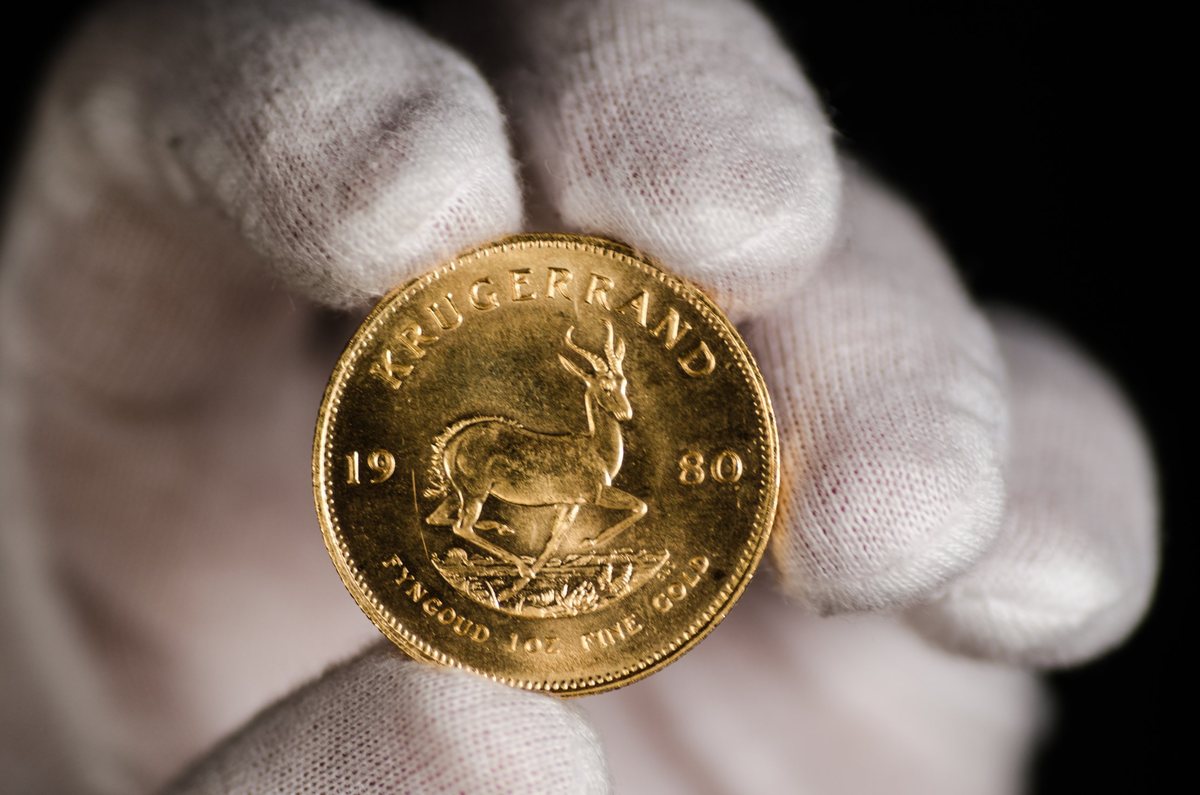
The Krugerrand has been around since 1967, which makes it the oldest of the five. Paul Kruger is on the front and a springbok on the back. The coin has no face value. Because so many have been made for so long, every dealer knows it. That makes it easy to sell, and the premium is often low.
Maple Leaf (Canada)
The Royal Canadian Mint has struck the Maple Leaf since 1979, with a maple leaf on the reverse. At 30 mm it is the smallest of the five. Newer coins have fine radial lines across the whole surface and a tiny engraved maple leaf with numbers in it that you can see under a loupe. These features make the coin harder to copy.
Philharmonic (Austria)
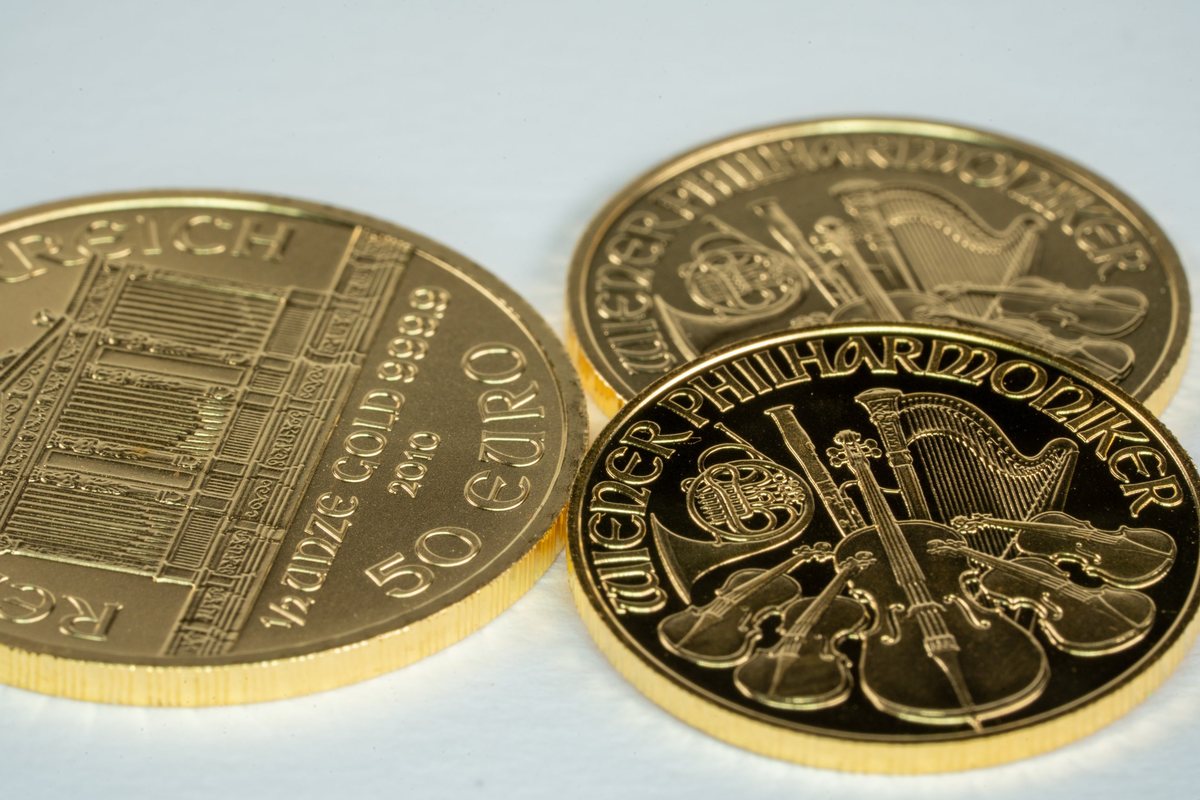
The Vienna Philharmonic has come from the Austrian Mint since 1989, showing instruments of the famous orchestra. It is the only one of the five with a value in euros, and at 37 mm it is the largest and thinnest. It is very popular in Europe and therefore easy to sell.
Britannia (United Kingdom)
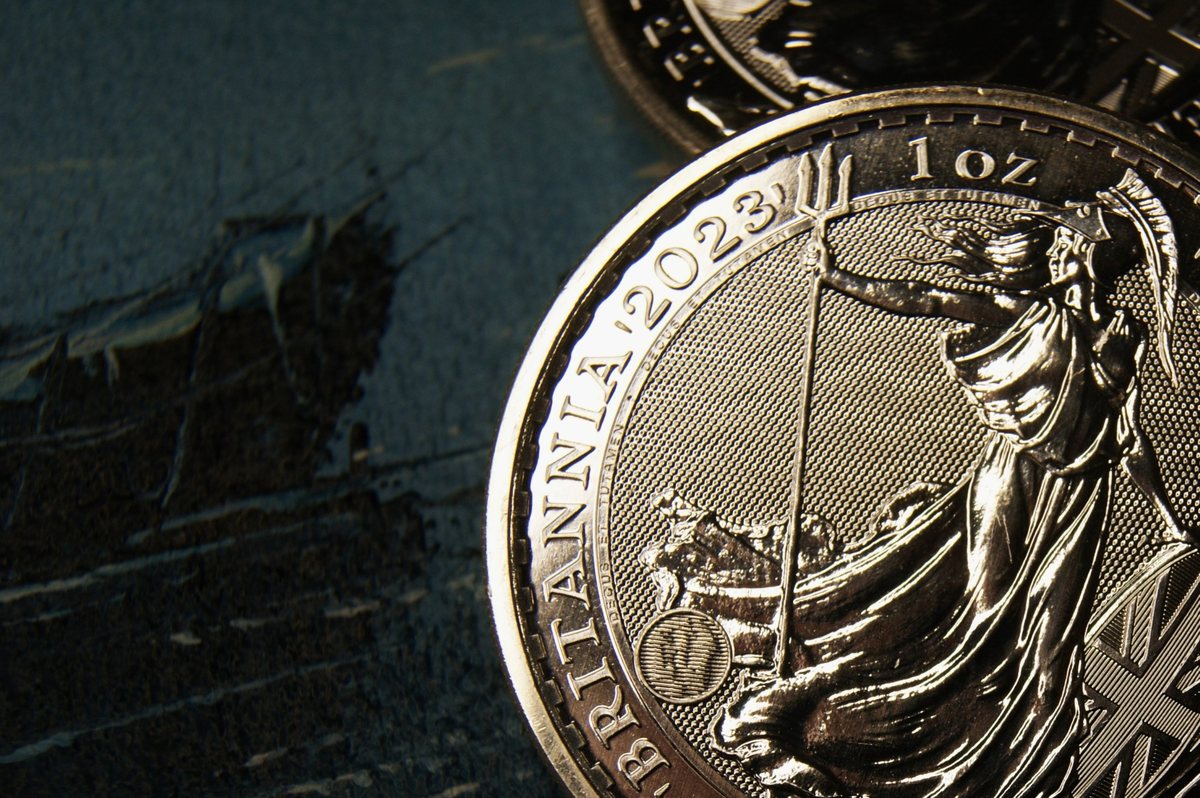
The Royal Mint’s Britannia has existed since 1987. Up to and including 2012 it was 22 carat, since 2013 999.9 gold. Since 2021 it has had four security features: an image that changes from a trident to a padlock as you tilt it, a wave pattern in the background, microtext around the edge and fine lines in the flag on the shield. The Britannia is legal tender in the United Kingdom. That makes it exempt from Capital Gains Tax for UK residents.
American Eagle (United States)
The United States Mint’s Gold Eagle has existed since 1986. Lady Liberty with a torch is on the front, based on a design from 1907. In mid-2021 the reverse got a new design: a close-up of the head of a bald eagle. In Europe its premium is often a little higher than for the other coins, because it is offered less here.

Tip: Pick the coin from the list in AgAurium and the weight, fineness and size are filled in straight away. The app uses the current gold price to show what your coins are worth now. Try AgAurium for free →
What to look for when buying
- Premium. You always pay a little more than the gold price. Check a few dealers to see which coin has the lowest premium that day. It is often the Krugerrand, the Maple Leaf or the Philharmonic. You can read what the premium is in Getting started with collecting.
- Smaller coins. All five also come in 1/2, 1/4 and 1/10 ounce. They are easier to afford and to sell in parts later, but you pay more premium per gram of gold.
- Selling. All five are well known and easy to sell. A coin without scratches in its original capsule or seal sells best.
- Year. For investment, the year usually doesn’t matter. Dealers often sell them as “random year”. An old or rare year can be worth more to a collector, though.
- Authenticity. Weigh and measure any coin you don’t buy from a well-known dealer. With the sizes in the table, you can quickly see if something is off. More checks are in Real or fake? Simple checks for gold and silver.
- VAT. In the UK and the European Union, investment gold is exempt from VAT. All five coins qualify.
What about silver?
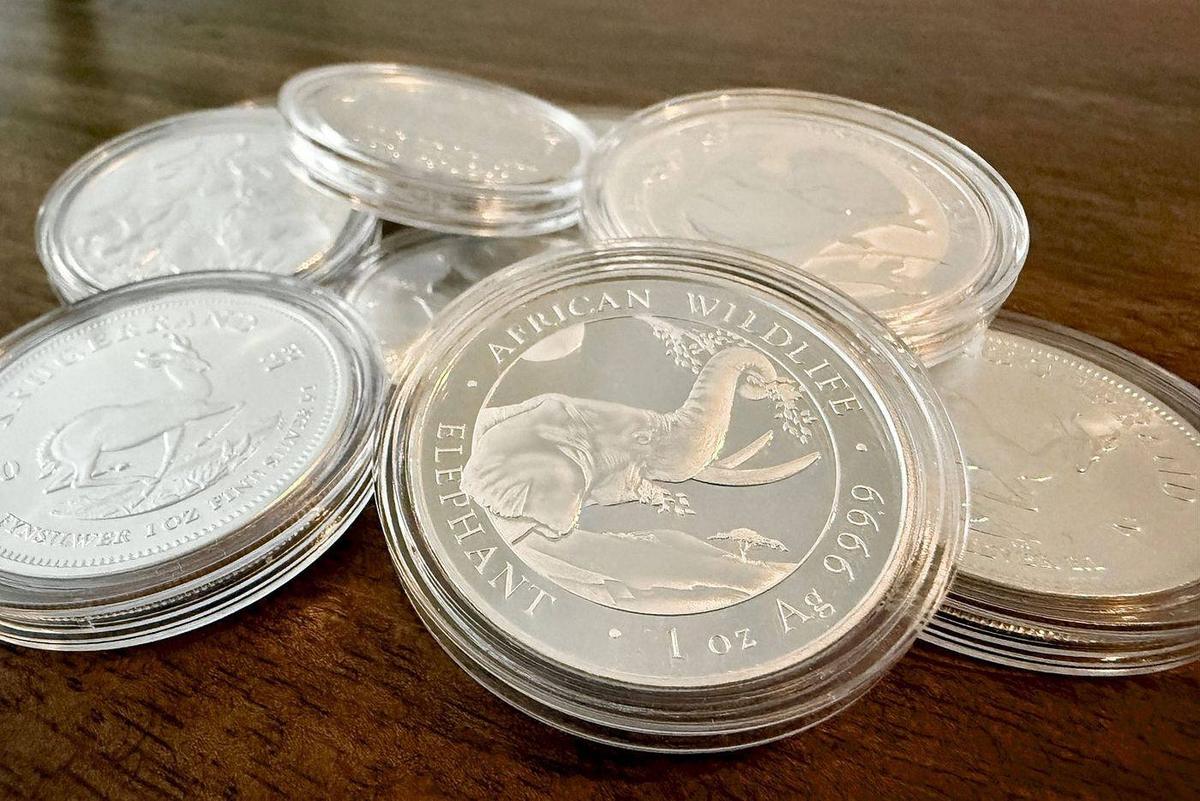
All five also exist in silver: the Maple Leaf (9999), the Philharmonic, the Britannia and the Eagle (999), and since 2017 the Krugerrand (999) as well. They are larger than the gold ones and, because silver is soft, more prone to scratches and milk spots. So keep them in a capsule. You can read which packaging is best in Capsules, seals, slabs and sleeves explained.
Keeping track of your bullion coins in AgAurium
All five coins are in the AgAurium catalogue, in gold and in silver. Pick the name from the list and the weight, fineness and diameter are filled in for you. Enter the quantity, the purchase date and the price. AgAurium then shows the current value and your gain or loss, based on today’s gold price.
Not sure about a coin? With the authenticity check, you compare your own measurements with the catalogue. And with a photo of the front and back, you record what condition your coin was in when you bought it.
AgAurium is free and ad-free. Find it useful? A donation helps to keep it free.
Keep track of your collection with AgAurium
Coins, bars, banknotes, stamps and jewellery in one overview, with photos, live metal prices and proofs of purchase. Free, without ads, in English, Dutch, German, French and Spanish. Your data stays yours.