
Stamp collecting is one of the most accessible hobbies there is. You can start with the stamps on your post, an album from the loft or a packet from a charity shop. There is a lot to find and much of it costs little, so it helps to know where to look and what to watch out for. In this article you will read where to find stamps in the UK and how to make a good start.
Choose a direction
You don’t need to know straight away what you want to collect, but a direction helps. Many British collectors start with Great Britain: the stamps are easy to find, the catalogues are in English and you recognise the subjects. Other options:
- A country or region: the Commonwealth, the Channel Islands and the Isle of Man, or a country you have a connection with.
- A theme: birds, ships, sport, railways or space travel. Then you collect across all countries.
- A period: the stamps of one reign, such as the Machin definitives of Queen Elizabeth II, or the year you were born.
- Postal history: envelopes with interesting postmarks, first day covers or old postcards.
You can read more about choosing a theme and starting out in general in Getting started with collecting.
Societies and local clubs
The best place to learn is among other collectors. Most stamp societies in the UK are linked to the Association of British Philatelic Societies (ABPS), the national organisation for philately. On its website you can search for societies near you by location, and find specialist societies for one country or theme. The ABPS also has a section for young collectors and a calendar of local, regional and national events.
What does a society give you?
- Club evenings. Talks, displays and the chance to swap or buy duplicates from other members.
- Exchange packets. At many societies, booklets with members’ stamps go round. You take out what you want and pay the society.
- Knowledge. Experienced members help with questions about perforations, watermarks and condition.
If you want to go further, the Royal Philatelic Society London, founded in 1869, has a large library, publishes *The London Philatelist* and holds meetings, including online ones.
Not sure about a society? Go along to a club evening as a guest first. Visitors are usually very welcome.
Fairs and exhibitions
At a stamp fair you see a lot on offer in one place. You can search through boxes of loose stamps, compare prices and talk to dealers. There are small fairs run by local societies and larger trade fairs. The biggest is Stampex International, organised by the Philatelic Traders’ Society at the Business Design Centre in Islington, London. Check the website for the dates of the next show.
Take a list of what you are looking for, plus tongs and a loupe. You can read what else is useful in Tools for collectors.
Stamp shops and dealers
A regular dealer is useful when you are looking for something specific or want advice. Many professional stamp dealers in the UK are members of the Philatelic Traders’ Society (PTS), the trade association for the stamp trade. Members agree to follow its Code of Conduct, and the PTS website has a member directory you can search by location and speciality.
Auctions
At a stamp auction you will often find complete collections, lots by country and individual better stamps. That can be a good way to buy a foundation in one go. Do keep an eye on:
- The buyer’s premium. Costs are added on top of your bid. Include them before you bid.
- The description. Read carefully whether stamps are mint never hinged, hinged or used.
- Viewing. Many auctions let you view the lots beforehand or ask for extra photos.
Online marketplaces
A lot of stamps change hands on online marketplaces and auction sites, from single stamps to whole albums. You will find good material there, but also exaggerated descriptions and forgeries. A few rules of thumb:
- Ask for sharp photos of the front and back, especially of mint stamps.
- Be careful with expensive classic stamps that come without a certificate.
- Compare prices with the catalogue and with other offers.
Tip: Note the Stanley Gibbons number of each stamp in AgAurium, along with where you bought it. Before a fair or a society meeting you can then check which stamps you already have, so you don’t buy duplicates. Try AgAurium for free →
New stamps from Royal Mail
Want the new British issues? Royal Mail sells its Special Stamps, presentation packs and first day covers in its online shop. It also offers collecting subscriptions, so you receive your chosen item from every new Special Stamp issue.
Kiloware and packets
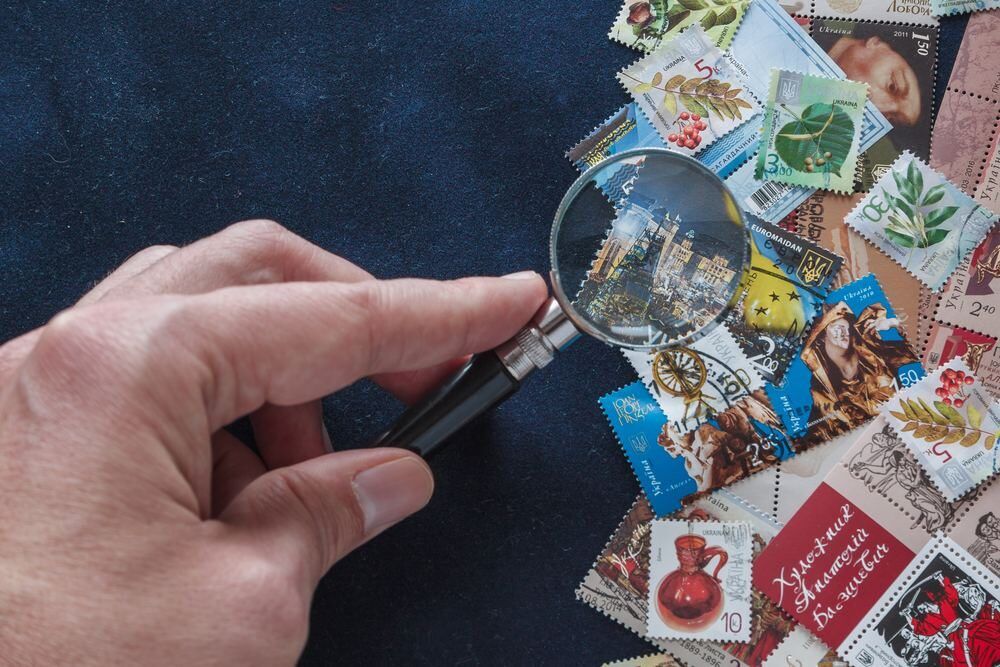
Kiloware is used stamps, usually still on paper, sold by weight. Much of it is collected by charities and churches. You get a lot of stamps for little money, and sorting through it is a pleasure in itself for many collectors. Packets of hundreds of different stamps from one country or theme are also a cheap start. Don’t expect rare stamps to turn up. See it as practice material and a way to fill your collection. You can read how to soak stamps off paper safely in Storing and handling stamps.
An inherited collection or an album from the loft
Many people are given a collection by a relative. Don’t start sorting, soaking or pulling off hinges straight away. First take a calm look at what you have. A society or a dealer can tell you whether there is anything special in it. Bear in mind that many modern British stamps exist in very large numbers and fetch little. Old albums with limp PVC strips are best replaced.
The catalogue
For British stamps, the catalogues from Stanley Gibbons are the standard reference. Each stamp has its own SG number, and dealers, auctions and collectors use those numbers. For beginners, the simple colour checklist *Collect British Stamps* is a good start. The *Great Britain Concise* catalogue goes into more detail. For other countries there are separate volumes, such as *Commonwealth & British Empire Stamps 1840-1970*.
| What | What for |
|---|---|
| SG number | Stating exactly which stamp you mean |
| Catalogue price | A guide value, not a selling price |
| Varieties | Recognising perforations, paper and watermarks |
In practice you often pay much less than the catalogue price for common stamps.
What to avoid
- Hinges on mint never hinged stamps. Use a stockbook or mounts instead.
- Cheap “postage” stamps online. Royal Mail warns that it does not sell stamps at large discounts. Heavily discounted sheets of first or second class stamps on shopping platforms may be counterfeit. Buy postage from Royal Mail, the Post Office or a reputable shop.
- Buying expensive stamps without knowledge. If in doubt about whether a stamp is genuine, buy it with a certificate or ask an experienced collector or dealer.
- Buying everything because it is cheap. A pile of common stamps takes up space and adds little.
- Keeping no records. After a few years you no longer know what you have and what you paid.
You can read how to assess the condition of a stamp in Grading condition.
How AgAurium helps
An album shows which stamps you have, but not where you bought them or what you paid. In AgAurium you record the country, year, face value and condition of each stamp, with a photo of the front and back. The SG number, the perforations or a special postmark go in the notes.
Under storage location you might write “stockbook 2, page 7”. That way you can see at a fair or a club evening what you already have and what you are still looking for.
AgAurium is free and ad-free. It keeps going thanks to donations from its users.
Keep track of your collection with AgAurium
Coins, bars, banknotes, stamps and jewellery in one overview, with photos, live metal prices and proofs of purchase. Free, without ads, in English, Dutch and German. Your data stays yours.